The Nvidia Scandal Could Upend Chip Sales to China
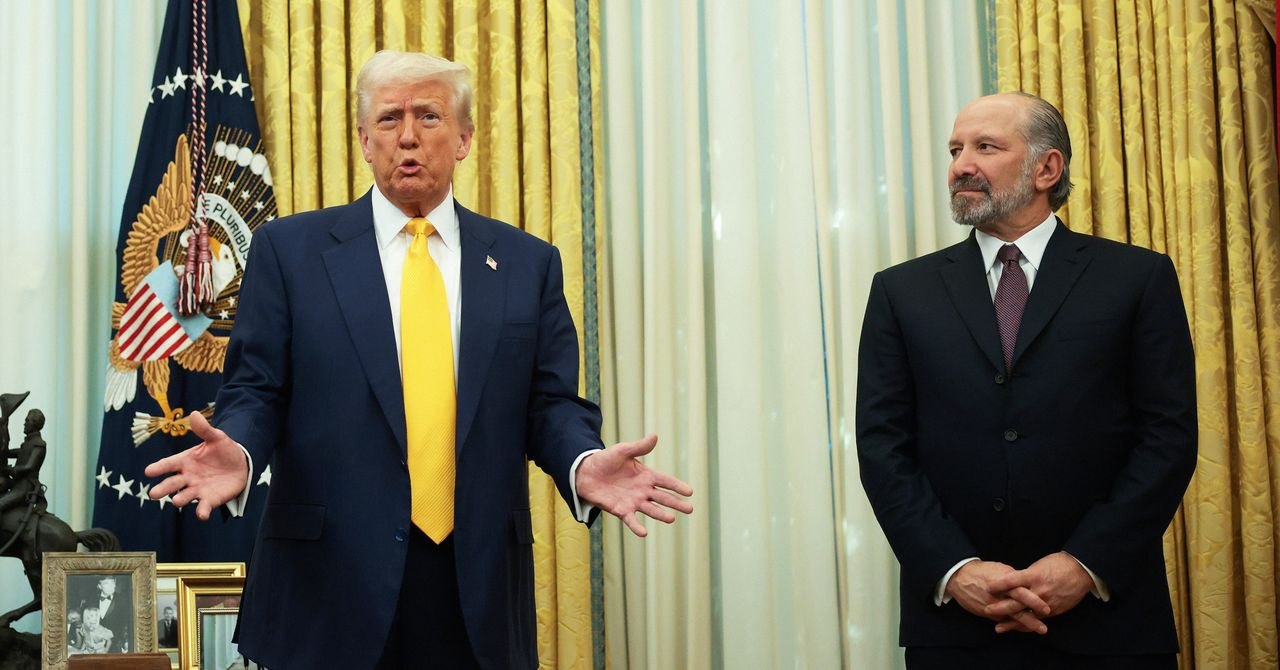
President Donald Trump backed commerce secretary Howard Lutnick over delayed sanctions after Nvidia chips reached Megaspeed data centers across Southeast Asia.
By Dillip Chowdary • Nov 18, 2026 • Source: Wired
At a glance
- Product
- Nvidia H200 AI chips
- Next-gen chips
- Blackwell and Rubin
- Meeting date
- November 5
- Affiliates rule
- September 2025
- Summit date
- End of October 2025
- Intermediary
- Aivres and Megaspeed
President Donald Trump defended commerce secretary Howard Lutnick amid cabinet disputes over semiconductor export controls to China following political fallout from former Nvidia chief executive Jensen Huang. According to Wired's report, treasury secretary Scott Bessent criticized Lutnick for delaying sanctions against corporate intermediaries. Trump backed Lutnick, arguing that controlled chip sales preserve Chinese reliance on American technology while boosting domestic stock markets ahead of bilateral diplomatic talks.
This report covers the executive cabinet clash, the corporate conduits routing restricted processors, and upcoming rules on offshore compute clusters. It provides key analysis for enterprise procurement teams, trade compliance counsels, and technology investors tracking semiconductor export controls across Asian hubs.
01Cabinet divisions during Oval Office review
Tensions surfaced during a November 5 Oval Office meeting convened to evaluate fallout from Jensen Huang’s relationship with Alice Huang, a former executive at Megaspeed. Scott Bessent confronted Lutnick directly regarding the pace of blacklisting the intermediate enterprise. Bessent stressed that secretary of state Marco Rubio and trade representative Jamieson Greer had already endorsed adding Megaspeed to the entity list.
Lutnick told officials he would defer to the president, agreeing to blacklist Megaspeed if directed. However, Lutnick explained that sanctioning the firm immediately would prove ineffective because Megaspeed already obtained the chips months earlier. Trump rejected immediate sanctions, arguing that hasty moves risked a blowup with Beijing ahead of his Asia trip and meeting with Chinese leader Xi Jinping.
02Interim trade restrictions on remote compute
Rather than relying on corporate blacklists, the White House directed Lutnick to draft an interim trade rule targeting remote access channels. A White House spokesperson confirmed the upcoming regulation aims to crack down on intermediary networks and prioritize computing resources for domestic superintelligence developers over foreign shell enterprises. The administration uses superintelligence to describe artificial intelligence.
The forthcoming standard restricts Chinese artificial intelligence research laboratories from leasing computing capacity hosted across data centers in Southeast Asia. Officials noted that physical hardware barriers fail when foreign entities rent raw computing power remotely through offshore server clusters. The administrative framework aims to eliminate this offshore computing route without completely severing bilateral trade ties.
Note: A senior White House official emphasized that the administration remains adamant that Chinese enterprises cannot acquire next-generation Nvidia hardware such as Blackwell and Rubin.
Advertisement
Tech Pulse Daily
Get tomorrow's pulse first
Join engineers who read Tech Pulse before stand-up. Free, weekday mornings.
| Chip Family | Architecture Base | Regulatory Policy | Distribution Status | | Blackwell and Rubin | Next-generation AI | Complete export prohibition | Barred from Chinese firms | | H200 | Hopper architecture | Remote lease restrictions | Diverted through intermediate conduits |
03Corporate intermediaries in California and Southeast Asia
The operational channel enabling hardware access relied on a sequence of corporate entities originating with Inspur, a blacklisted Chinese server conglomerate. Inspur maintained an operating subsidiary in California named Aivres, which purchased restricted high-performance processors locally. Operating as a domestic enterprise within the United States, Aivres legally procured restricted Nvidia processors without activating direct export bans.
Aivres transferred billions of dollars worth of restricted Nvidia processors, including Hopper architecture H200 chips, to subsidiaries connected to Megaspeed. Instead of shipping physical silicon into China, Megaspeed deployed server racks in data centers across Malaysia and Indonesia to rent computational capacity to major Chinese companies. A spokesperson for Aivres stated that the company complies with all United States export controls.
04Enforcement fallout under the affiliates rule
Lutnick’s cautious stance reflected intense institutional friction following the implementation of the affiliates rule in September 2025. Formulated by the Bureau of Industry and Security, the regulation automatically extended trade penalties to any enterprise possessing 50 percent ownership by a blacklisted entity or military end user. The broad mechanism intended to shut down subsidiary shell networks across global markets.
The aggressive deployment triggered retaliatory actions from Beijing, which suspended exports of critical rare earth metals to the United States. The resulting bottleneck prompted internal criticism accusing the Commerce Department of provoking an uncoordinated trade war. In response, the White House ordered Commerce to halt the affiliates rule and require advance presidential clearance before enforcing subsequent restrictions.
05Diplomatic truces and future technology dependence
Administrative caution deepened after the Busan summit concluded at the end of October 2025, where Donald Trump and Xi Jinping agreed to a bilateral trade truce. Trump reiterated that selective hardware availability reinforces long-term Chinese dependence on American technology while supporting United States equity markets. The White House adopted the view that calibrated commerce prevents economic disruptions during high-stakes diplomatic discussions.
The policy highlights ongoing disputes between cabinet officials demanding total commercial containment and leadership pursuing pragmatic commercial reliance. Regulatory compliance across Asian data centers will face stringent oversight once the interim trade rule officially takes effect. Technology vendors and cloud operators must prepare for federal scrutiny regarding cross-border remote compute access agreements.
Frequently asked questions
What role did Megaspeed play in routing Nvidia chips?
Megaspeed received billions of dollars worth of Nvidia H200 chips through Inspur subsidiary Aivres and leased compute power from data centers in Malaysia and Indonesia to Chinese companies.
Why did Donald Trump defend commerce secretary Howard Lutnick?
Trump defended Lutnick to avoid a diplomatic blowup with China ahead of meetings with Xi Jinping, arguing that controlled chip sales keep China reliant on American technology and support United States tech stocks.
What happened to the Bureau of Industry and Security affiliates rule?
Introduced in September 2025 to restrict firms 50 percent owned by blacklisted entities, the rule was suspended after China retaliated by halting critical rare earth metal exports to the United States.
Sources

Author
Dillip Chowdary
Writes Tech Bytes coverage of AI, engineering, and the tools that actually ship. Editor of Tech Pulse Daily.
Related on Tech Bytes
Advertisement