The first Nvidia RTX Spark mini PCs launch today from Asus, Dell, and MSI
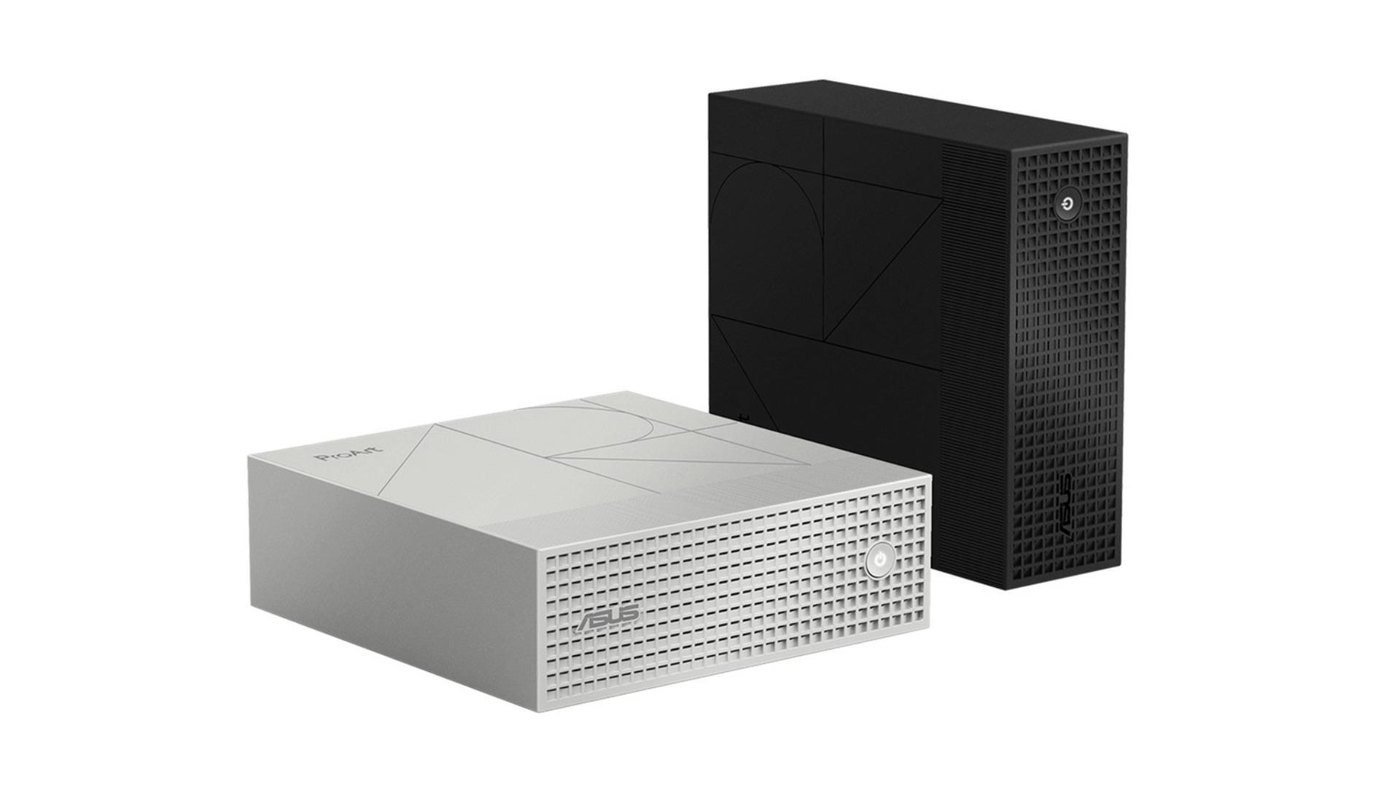
Nvidia’s RTX Spark N1X superchip has arrived in compact desktops from Asus, Dell, and MSI, packing 128GB of memory and 1 petaflop of AI compute from $4,499.
By Dillip Chowdary • Nov 18, 2026 • Source: The Verge
At a glance
- Product
- Nvidia RTX Spark N1X mini PCs
- Starting price
- $4,499 (Asus ProArt GR1X)
- Compute performance
- Up to 1 petaflop of AI performance
- Silicon specs
- 20-core Grace CPU, 6,144-core Blackwell GPU
- Memory limit
- Up to 128GB unified memory
- Launch partners
- Asus, Dell, MSI; Acer, Gigabyte, HP later
Nvidia’s RTX Spark N1X superchip has arrived on desktop workstations from Asus, Dell, and MSI following its debut in laptops earlier this year, according to The Verge's report. Built specifically for local AI workloads and accelerated creative pipelines, the compact desktop systems integrate a 20-core Nvidia Grace CPU alongside a 6,144-core Blackwell RTX GPU. The mini PCs support up to 128GB of memory and are priced firmly in professional workstation territory, with Asus kicking off retail availability at $4,499 for its baseline ProArt GR1X configuration.
This rollout targets developers, technical artists, and engineers seeking local alternatives to Apple’s Mac Studio or Mac Mini for running high-parameter local models and autonomous agents. Beyond current models from Asus, Dell, and MSI, the broader ecosystem will expand shortly with hardware from Acer, Gigabyte, and HP, alongside Microsoft’s dedicated Surface RTX Spark Dev Box scheduled to ship this month. The coverage below breaks down the silicon specifications, memory capacities, development toolchains, commercial pricing, and near-term hardware roadmaps.
01Silicon specifications and unified memory capacity
The core of each desktop mini PC is Nvidia’s RTX Spark N1X superchip, combining a 20-core Nvidia Grace CPU with a 6,144-core Nvidia Blackwell RTX graphics processing unit. System configurations allow buyers to equip these compact chassis with up to 128GB of unified memory. According to Nvidia, this integrated silicon configuration achieves up to 1 petaflop of AI compute performance.
The unified memory pool is tailored specifically for loading large machine learning weights directly on the workstation without relying on remote inference clusters. In addition to powering standalone LLMs, the hardware accelerates creative software suites including native AI functionality in Adobe Photoshop and Premiere. Technical artists also gain access to DLSS 4.5 Ray Reconstruction within the newly released Blender 5.3 viewport renderer.
While the underlying architecture can run gaming workloads and Windows on Arm continues to expand its software compatibility, the system class is engineered primarily for compute-heavy desktop development. Nvidia positions the hardware as a dedicated, always-on local system capable of hosting autonomous agent runtimes around the clock without thermal throttling or remote latency penalties.
02Workstation upgrades across hardware generations
The desktop transition marks a distinct capacity step up from earlier Spark portable releases and builds directly on last year’s standalone DGX Spark chassis. By packaging datacenter-derived Grace and Blackwell architectures into mini PC form factors, the machines balance floor footprint against raw matrix operations.
| Metric | DGX Spark (Previous Year) | RTX Spark N1X Desktop (Current) |
|---|---|---|
| Form Factor | Full Desktop Tower | Compact Mini PC |
| GPU Architecture | Blackwell RTX | Blackwell RTX (6,144 cores) |
| CPU Architecture | Grace CPU | 20-core Grace CPU |
| Peak AI Compute | Enterprise Baseline | Up to 1 Petaflop |
| Maximum Memory | Workstation Spec | Up to 128GB Unified Memory |
| Entry Price | Developer Appliance Tier | $4,499 (Asus ProArt GR1X) |
Workstation users moving from mobile setups receive increased memory headroom alongside steady thermal power draw inside fixed deskside enclosures. The unified memory architecture eliminates traditional PCIe bus bottlenecks when moving tensor buffers between host CPU threads and matrix tensor cores. This allows developers to run continuous agent processes alongside interactive 3D viewports.
The integration provides a direct counterweight to Apple Silicon desktop tiers by combining local Windows software environments with standard graphics libraries. Creative studios using real-time rendering pipelines can run DLSS 4.5 reconstruction routines alongside concurrent background model execution without saturating discrete video memory allocations.
Advertisement
Tech Pulse Daily
Get tomorrow's pulse first
Join engineers who read Tech Pulse before stand-up. Free, weekday mornings.
03Developer environment and local agent execution
Local software development on the Spark N1X relies on native CUDA toolchain support operating inside Windows on Arm. Engineers have direct access to Linux development tools and command-line environments using Windows Subsystem for Linux. This hybrid environment lets developers run native Linux deep learning containers while maintaining access to desktop client applications.
Because the system functions as a dedicated local server for background agents, engineers can configure autonomous model loops using standard client interfaces and containerized runtimes. Workstation pipelines interact directly with local model instances without routing data through proprietary cloud APIs.
Local execution provides low-latency execution loops for multi-step agent frameworks, tool-calling routines, and real-time model experimentation. The native CUDA layer guarantees compatibility across established Python AI libraries, model execution runtimes, and local fine-tuning scripts compiled for Nvidia hardware architectures.
04Configuration options and vendor pricing tiers
Commercial availability begins immediately with Asus, Dell, and MSI, though entry into the product line requires substantial enterprise budgets. Asus has established the public opening price tier with its ProArt GR1X mini desktop, which starts at $4,499 for a base model equipped with 64GB of memory and a 1TB solid-state drive.
Higher configurations across the launch partners scale memory up to the platform ceiling of 128GB. These expanded memory tiers cater to teams evaluating larger model parameter weights that exceed conventional discrete desktop GPU video memory limits.
Note: While Windows on Arm gaming compatibility continues to improve, the $4,499 starting price makes these systems commercially viable only as professional AI development and workstation rendering hardware.
05Manufacturer release schedule and shipping timeline
The hardware rollout represents a coordinated multi-vendor distribution strategy across the workstation sector. Launch-day units from Asus, Dell, and MSI are available immediately through commercial channels and system integrators.
Microsoft is preparing its own specialized iteration, the Surface RTX Spark Dev Box, which is scheduled to begin customer shipments before the end of the month. The Microsoft device is explicitly tailored to enterprise engineering departments and software creators building Windows-targeted AI applications.
Subsequent desktop waves will arrive from Acer, Gigabyte, and HP, providing additional chassis form factors and cooling designs later in the cycle. The expanding list of hardware vendors cements the RTX Spark N1X platform as Nvidia’s standardized compact architecture for local edge inference.
Frequently asked questions
What hardware powers the new Nvidia RTX Spark mini PCs?
The desktops run on Nvidia’s RTX Spark N1X superchip, which packages a 20-core Nvidia Grace CPU and a 6,144-core Blackwell RTX GPU with up to 128GB of memory.
How much do the RTX Spark desktop PCs cost?
Pricing starts at $4,499 for the Asus ProArt GR1X, which includes 64GB of memory and 1TB of onboard storage.
Which manufacturers are releasing RTX Spark desktops?
Asus, Dell, and MSI launched systems today, Microsoft's Surface RTX Spark Dev Box ships this month, and Acer, Gigabyte, and HP will release models later.
Sources

Author
Dillip Chowdary
Writes Tech Bytes coverage of AI, engineering, and the tools that actually ship. Editor of Tech Pulse Daily.
Related on Tech Bytes
Advertisement