Deep Dive: What Nvidia's $13B Hugging Face Acquisition Means for Open-Source AI
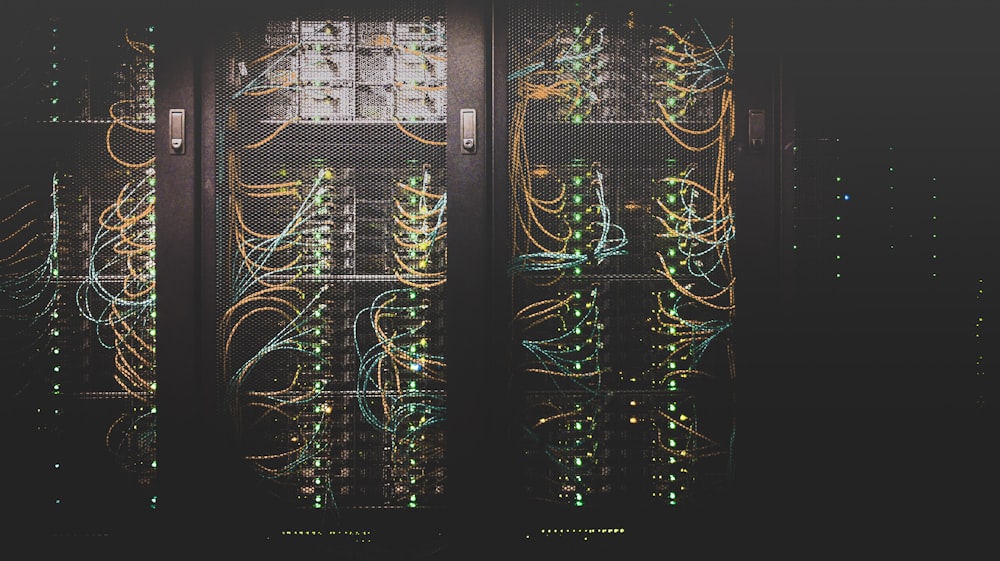
An in-depth evaluation of how Nvidia's acquisition of Hugging Face reshapes open-source model deployment, cloud compute integration, and hardware neutrality.
Nvidia's $13 billion takeover of Hugging Face represents a structural shift in the AI software layer. Hugging Face has served as the neutral Switzerland of artificial intelligence, hosting over 1 million open-weights models across PyTorch, JAX, and TensorFlow.
The deal
The deal in Deep Dive: What Nvidia's $13B Hugging Face Acquisition Means for Open-Source AI is the fact pattern. Hold the round size, investors, and valuation to what Ars Technica / TechCrunch actually printed. If a figure is missing, leave the hole visible — do not fill it from memory of a previous round.
An in-depth evaluation of how Nvidia's acquisition of Hugging Face reshapes open-source model deployment, cloud compute integration, and hardware neutrality. Nvidia's $13 billion takeover of Hugging Face represents a structural shift in the AI software layer.
Why this round now
Rounds like this usually land when a product has a buyer and a capacity problem, not because a market is 'hot'. Ask which of those two the company is solving. Capacity problems look like GPUs, headcount, and go-to-market; buyer problems look like a new SKU or a new segment.
Hugging Face has served as the neutral Switzerland of artificial intelligence, hosting over 1 million open-weights models across PyTorch, JAX, and TensorFlow.
What the money is for
Use-of-proceeds, when named, is the only honest roadmap. If the piece does not name one, assume hiring plus compute until the company says otherwise. That assumption is a prior, not a fact — label it that way if you repeat it.
Cross-check this section against Ars Technica / TechCrunch and the official docs before you brief stakeholders on Deep Dive: What Nvidia's $13B Hugging Face Acquisition Means for Open-Source AI.
Competitive context
Look at who already sells the same job-to-be-done. A large check changes how long the startup can price below incumbents and how loudly the incumbent will respond with a bundle or an acquisition rumor.
Cross-check this section against Ars Technica / TechCrunch and the official docs before you brief stakeholders on Deep Dive: What Nvidia's $13B Hugging Face Acquisition Means for Open-Source AI.
Open questions
Open questions: dilution, governance, and whether the product still ships to outsiders after the money clears. Wait for the S-1, the blog post, or the first enterprise contract leak — not the tweet. Until then, treat strategic claims as marketing.
Cross-check this section against Ars Technica / TechCrunch and the official docs before you brief stakeholders on Deep Dive: What Nvidia's $13B Hugging Face Acquisition Means for Open-Source AI.
A 3–5 minute news post is a briefing, not a runbook. Keep Ars Technica / TechCrunch and the vendor's primary page in another tab, quote only what they printed, and write down the single decision this story forces (upgrade, wait, or ignore) before you Slack it to the rest of the team. If you need more than that decision, you want the primary docs or a later engineering deep-dive — not another recap of Deep Dive: What Nvidia's $13B Hugging Face Acquisition Means for Open-Source AI.
When you brief someone else on Deep Dive: What Nvidia's $13B Hugging Face Acquisition Means for Open-Source AI, lead with the surface that moved and the decision you need from them. Do not paste the whole thread. If you cannot name the surface — API, policy, model, hardware, or commercial terms — you are not ready to brief. Go back to Ars Technica / TechCrunch and the vendor page until you can. That extra ten minutes is cheaper than a wrong upgrade or a missed exposure.
Treat day-one coverage of Deep Dive: What Nvidia's $13B Hugging Face Acquisition Means for Open-Source AI as a pointer, not a specification. Ars Technica / TechCrunch is useful for names, dates, and the claim as stated; it is not a substitute for the changelog, the advisory, or the contract clause that actually binds you. If those artifacts are not public yet, wait. Acting on a paraphrase is how teams ship the wrong flag or miss the one dependency that was actually in scope.
Subscribe to Tech Bytes Daily Briefing
Get top technology breakdowns, silicon engineering insights, and daily executive summaries delivered straight to your inbox.
No spam. Unsubscribe anytime.
Get Daily Tech Insights Direct to Your Inbox
Join 45,000+ engineers, founders, and tech leaders receiving our 5-minute daily breakdown of AI, hardware, and tech policy.
Tech Pulse Daily
Get tomorrow's pulse first
Join engineers who read Tech Pulse before stand-up. Free, weekday mornings.
No spam. Unsubscribe anytime.
By embedding TensorRT-LLM compression tools and Triton Inference Server defaults directly into the transformers library, Nvidia can significantly streamline model deployment on DGX Cloud while subtly penalizing alternative accelerator architectures.
Open-source advocates and cloud providers are closely monitoring whether Hugging Face's datasets and Spaces hosting features will maintain strict platform neutrality or tilt toward Nvidia-hosted endpoints.

Author
Dillip Chowdary
Writes Tech Bytes coverage of AI, engineering, and the tools that actually ship. Editor of Tech Pulse Daily.
Related on Tech Bytes
OpenAI to start showing ads on ChatGPT’s free and Go tiers in India
Read →
Deep-Dive: Modernizing Legacy Supersonic Aircraft with Glass Cockpit Avionics
Read →
Rockstar Releases Grand Theft Auto VI Extended Look Preview on YouTube and Netflix
Read →
Microsoft Rebrands 365 Roadmap to 'AI at Work' and Issues Windows 11 Stuttering Fix
Read →
Free Tools
- ✉️ Vintage Letter Generator
Free handwritten-style vintage letter maker — love notes, parchment, download
- 🎨 Past Forward
AI vintage photo editor — travel a portrait through decades
- ✈️ CareerPilot
AI job-search copilot: live job matching, fit scores & resume optimization
- ⚡ Code Formatter
Clean and format any code snippet instantly
- 🔒 Data Masking Tool
Mask sensitive data in logs and test fixtures
- 🖼️ Base64 Decoder
Decode and preview base64 image strings