Leaker claims Apple developing four models of 20th anniversary iPhone
It is intended for hardware enthusiasts, engineers, and consumers tracking Apple’s manufacturing evaluations and flagship redesign cycles for next year.
By Dillip Chowdary • Nov 18, 2026 • Source: 9to5Mac
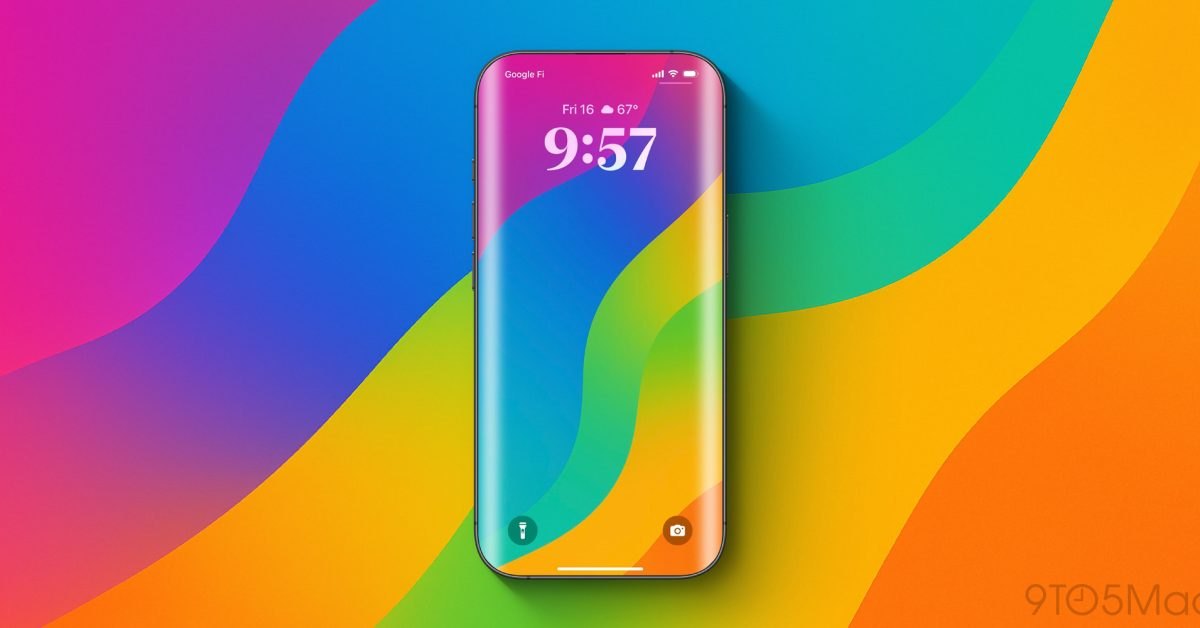
At a glance
- Product
- iPhone 20 anniversary models
- Prototype count
- Four competing models
- Bezel width
- Around 1mm thick
- Curved edge width
- Approximately 1mm wide
- Prototyping timeline
- In development for three years
- Design style
- Flat and quad-curved glass
Apple is currently developing four models for its 20th anniversary iPhone generation, commonly referred to as the iPhone 20, according to details shared by leaker Ice Universe and highlighted in 9to5Mac's report. The upcoming flagship devices are anticipated to deliver an all-glass appearance, representing the most substantial visual overhaul to the iPhone lineup since the launch of the iPhone X.
This breakdown examines the technical details behind the four concurrent hardware builds, including testing around curved glass geometry, bezel dimensions, and front-facing optical illusions. It is intended for hardware enthusiasts, engineers, and consumers tracking Apple’s manufacturing evaluations and flagship redesign cycles for next year.
01Four parallel prototype hardware builds
Hardware evaluations show Apple testing four distinct physical variants rather than a traditional pair of flagships. The multi-track development approach points toward Apple evaluating dual iterations of both the Pro and Pro Max tiers to establish the functional limits of the new exterior shell.
Developing competing physical prototypes serves as standard operational practice inside Apple. The company subjects alternative designs to rigorous side-by-side benchmarking across everyday usability, drop and structural durability, and high-volume factory assembly feasibility before locking production tooling.
| Model Variant | Rear Glass Style | Target Tier | Curvature Status |
|---|---|---|---|
| Prototype A | Flat glass back | Pro candidate | Standard flat panel |
| Prototype B | Flat glass back | Pro Max candidate | Standard flat panel |
| Prototype C | Quad-curved glass | Pro candidate | Actively refined |
| Prototype D | Quad-curved glass | Pro Max candidate | Actively refined |
02Three years of quad-curve prototyping
The primary mechanical divide among the four test units sits on the rear enclosure, where two devices feature conventional flat glass panels and two feature quad-curved glass backs. Apple has kept the quad-curved design in active laboratory prototyping for three years, producing continuous revisions across several internal hardware cycles.
Engineers have spent those three years focusing adjustments directly on the glass curvature profile. The earliest iteration of the curved casing showcased a very pronounced slope along the edges, which testing teams later reduced to address structural and assembly constraints.
Note: Glass curvature specifications remain in active refinement, and Apple has already scaled back early ambitions regarding the steepness of the panel bends.
03One-millimeter borders and optical illusions
Advertisement
Tech Pulse Daily
Get tomorrow's pulse first
Join engineers who read Tech Pulse before stand-up. Free, weekday mornings.
Display integration on the anniversary generation centers around ultra-thin borders paired with shaped edge glass. The physical bezel width on the test units measures approximately 1mm thick, minimizing the non-active border area surrounding the display surface.
On the quad-curved models, the glass transitions into edge bends measuring roughly 1mm wide around all perimeter boundaries. By wrapping the curved glass across all four sides, looking straight onto the front face causes the perimeter border to vanish from direct view.
The resulting optical technique builds on the border-masking approach used on the Apple Watch display assembly. The geometry yields a near-borderless screen presence without requiring the complete removal of structural perimeter materials.
04Structural testing and factory feasibility
Evaluating parallel flat-back and quad-curved builds allows supply-chain planners to weigh aesthetic gains against automated manufacturing yield rates. Extreme compound glass bends historically present elevated failure rates during lamination, thermal forming, and drop-impact testing.
Retaining flat-glass variations alongside quad-curved units provides an immediate production fallback if curved tolerance windows prove too tight for mass production. These competing builds ensure Apple can meet projected flagship demand volumes even if glass-shaping lines face yield limitations.
The engineering team relies on real-world stress data from these test units to finalize chassis rigidity. Final assembly decisions will hinge on whether the 1mm quad-curve edge can survive drop survivability standards comparable to traditional flat enclosures.
05Flagship redesign since the iPhone X
Industry expectations place the finished iPhone 20 design as the most consequential physical revision to the lineup since Apple eliminated the home button on the iPhone X. That milestone shifted the form factor toward glass-sandwich construction and gestural interaction, setting the template for subsequent generations.
Transitioning to an all-glass exterior marks the next major inflection point for Apple industrial design. The anniversary models aim to strip away visible seams, presenting users with a smooth monolithic glass device while retaining internal component protection.
As manufacturing evaluations progress into next year, Apple will narrow the four prototypes down to final commercial designs. The ultimate configuration will determine whether retail flagships ship with quad-curved contours or standard flat rear surfaces.
Frequently asked questions
How many iPhone 20 prototype versions is Apple developing?
Apple is developing four prototypes in total, consisting of two models with flat glass backs and two models featuring quad-curved glass backs.
How thick are the bezels on the iPhone 20 prototypes?
The display bezels measure around 1mm thick, with curved edges on the quad-curved variants measuring approximately 1mm wide.
How does the quad-curved glass create a borderless appearance?
Because the glass curves around all four sides, the 1mm bezel becomes nearly invisible when viewed straight on, producing a near-borderless visual effect.
How long has Apple been testing the quad-curved iPhone design?
Apple has been actively prototyping and revising the quad-curved glass design for three years, reducing the pronounced curve of early versions.
Sources

Author
Dillip Chowdary
Writes Tech Bytes coverage of AI, engineering, and the tools that actually ship. Editor of Tech Pulse Daily.
Related on Tech Bytes
Advertisement