Flipper Devices launches $399 ‘Flipper One’ Linux-based multi-tool
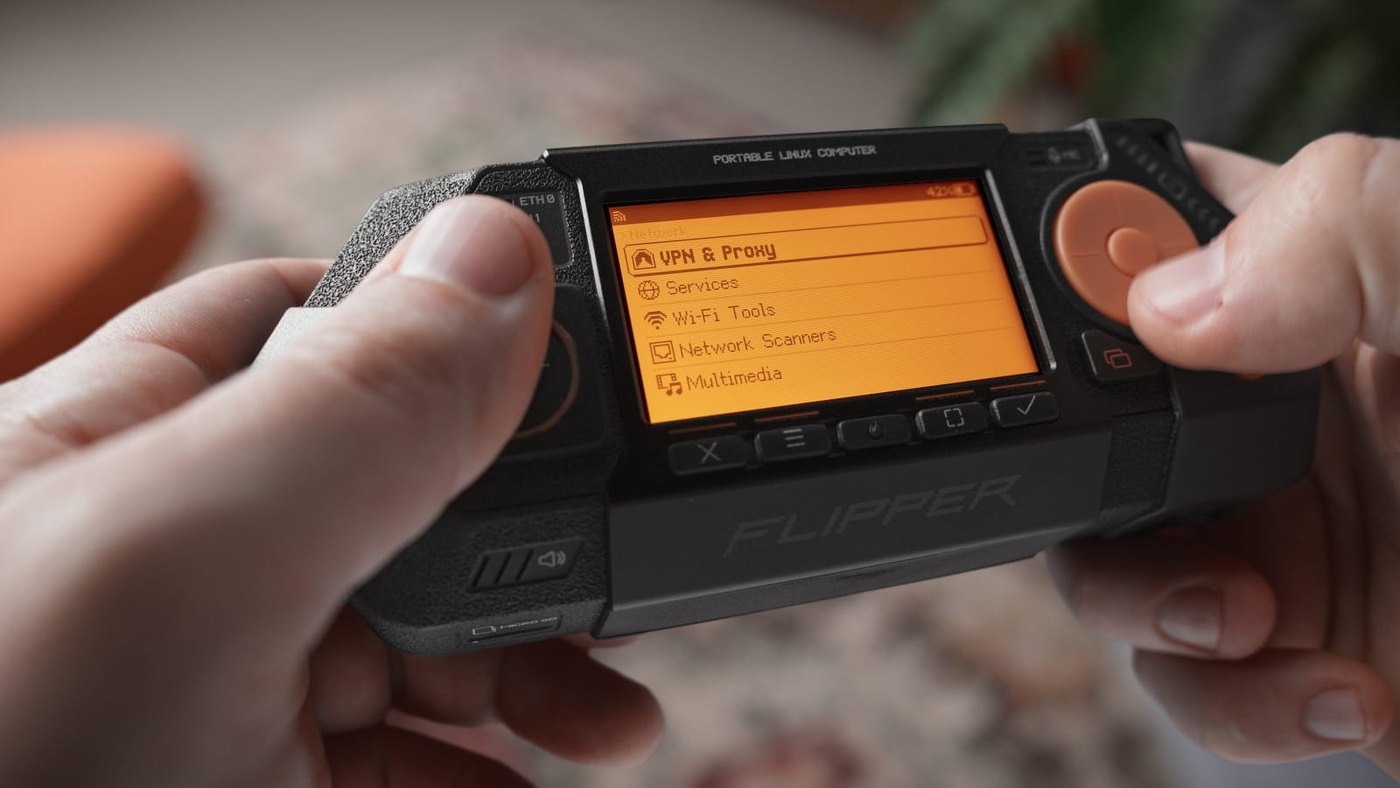
Flipper Devices launched a $399 Kickstarter campaign for the Flipper One, a Debian-powered portable Linux computer equipped with Wi-Fi 6E and Gigabit Ethernet.
By Dillip Chowdary • Nov 18, 2026 • Source: BleepingComputer
At a glance
- Product
- Flipper One
- Manufacturer
- Flipper Devices
- Base price
- $399
- Campaign window
- November 17 to December 17
- Fulfillment date
- July 2027
- Core OS
- Debian-based Flipper OS
Flipper Devices launched a crowdfunding campaign for Flipper One, a standalone portable Linux computer and networking multi-tool priced at $399, according to BleepingComputer's report. The release introduces a dedicated hardware platform engineered for on-device computing and network management rather than sub-GHz microcontroller penetration testing. Development began after years of engineering work, with the company opting to proceed despite ongoing volatility in component markets and broad memory supply pinches.
This analysis details the technical architecture, operating system configuration, radio expansion interfaces, and hardware pricing economics for network administrators, penetration testers, and systems engineers. Readers will find exact component breakdowns, software compatibility milestones, interface bandwidth specifications, and crowdfunding fulfillment timelines. The overview provides complete operational details so technical teams can assess device capabilities without consulting third-party summaries.
01Hardware economics and zero-margin pricing
Flipper Devices established a direct retail launch price of $399 to maintain hardware affordability amid unpredictable global RAM fluctuations. Internal cost accounting from the company indicates that system RAM and UFS storage modules collectively represent half of total bill-of-materials expenses. Company leadership stated that this pricing tier barely recovers manufacturing expenses, deliberately leaving no profit margin on initial hardware units.
Executive leadership explained in an official release statement that the project team rejected delaying the product release or imposing retail surcharges. The company noted that instead of waiting for perfect market conditions or raising the price, the development team chose to initiate the Kickstarter campaign. The public release prioritized access for individual technical users over early hardware profitability.
The manufacturing strategy follows an open community appeal initiated in May, where developers and hardware engineers discussed design hurdles. Engineering teams elected to push production prototypes into commercial assembly after stabilizing primary circuit layouts. The resulting hardware structure relies on dense packaging designed to sustain field computing duties.
02Debian platform and multi-link networking
The multi-tool runs Flipper OS, an operating system derived directly from the Debian distribution to support standard command-line software. For local and upstream connectivity, the chassis integrates a physical Gigabit Ethernet jack, a Wi-Fi 6E wireless radio, and an embedded eSIM. These physical and software interfaces allow technicians to deploy native diagnostic scripts, monitoring daemons, and administrative utilities directly in the field.
The underlying networking software stack can aggregate and balance up to five distinct network uplinks simultaneously. Field operators can configure the hardware as an independent wireless hotspot, manage localized firewall rule sets, and initiate encrypted VPN tunnels. The device also supports external display mirroring and desktop output through a multifunctional USB-C connector.
By combining an operating system environment with diverse transceivers, the platform handles complex traffic routing without needing an auxiliary laptop. Technicians can analyze live network segments or diagnose routing equipment directly through local interfaces. The hardware combines traditional network appliances into a single handheld diagnostic system.
03Dedicated computing across two distinct architectures
Advertisement
Tech Pulse Daily
Get tomorrow's pulse first
Join engineers who read Tech Pulse before stand-up. Free, weekday mornings.
Flipper One diverges fundamentally from the original Flipper Zero by moving from low-level transceiver analysis to full IP networking. While the earlier model targeted wireless access controls, radio remotes, and hardware debugging, this platform executes general-purpose network tasks. The table below outlines how the two dedicated hardware releases differ across core capabilities and deployment roles.
| Feature | Flipper Zero | Flipper One |
|---|---|---|
| Primary Focus | Microcontroller penetration testing | IP networking and portable Linux computing |
| Operating System | Embedded proprietary RTOS | Debian-based Flipper OS |
| Wired Interface | GPIO pins and USB 2.0 | Gigabit Ethernet and USB-C display |
| Commercial Base | Raised $4.8 million in 30 days | Launched at $399 zero-margin pricing |
The shift reflects distinct user needs within penetration testing and systems administration environments. Flipper Zero achieved widespread adoption after selling over one million devices worldwide following its initial 2020 Kickstarter campaign. Flipper One targets higher layers of the networking model, handling packet inspection and routed traffic.
04Mainline Linux patches and firmware development
Software engineers designed the device to run directly on the mainline Linux kernel rather than relying on unmaintained vendor forks. Upstream patches implementing USB-C DisplayPort output are currently undergoing formal review with the core Linux kernel community. Integrating these patches upstream ensures long-term software stability and facilitates routine operating system maintenance for standard Linux toolchains.
Development teams continue working on core firmware optimizations to lower system memory power consumption during sustained field operations. Hardware engineers are also actively purging remaining closed-source boot components from the firmware initialization pipeline. Completing these tasks will leave the device with a transparent, fully auditable startup sequence across internal modules.
The development milestones achieve stability goals originally outlined during community engineering reviews earlier this year. Shifting drivers into the primary kernel tree protects the platform against driver abandonment and software regressions. This strategy allows the engineering team to focus on security auditing and interface software.
05Modular radio add-ons and production timelines
Flipper Devices introduced three modular add-ons that attach directly to the main chassis to extend field capabilities. The primary expansion unit provides LoRa connectivity supporting MeshCore, Meshtastic, Reticulum, and voice walkie-talkie communication protocols. Additional expansions include a 5G cellular modem for mobile uplinks and a software-defined radio module whose complete specifications will appear later.
The official Kickstarter campaign runs between November 17 and December 17 to collect orders and fund production tooling. Initial hardware units are scheduled to ship to early backers in July 2027. Each retail shipping carton will contain the Flipper One handheld unit alongside a standard USB-C connection cable.
Note: Shipment of initial production units depends on the successful conclusion of the December 17 crowdfunding window and subsequent factory manufacturing runs.
Frequently asked questions
How much does the Flipper One cost?
The device launches at $399 on Kickstarter, a price set to cover manufacturing costs without an added hardware profit margin.
What operating system powers the Flipper One?
The device runs Flipper OS, a custom platform based on the Debian Linux distribution running on the mainline Linux kernel.
How does the Flipper One differ from the Flipper Zero?
While Flipper Zero focuses on hardware pentesting and sub-GHz frequencies, Flipper One is a portable Linux computer tailored for IP networking and on-device computing.
What network connections are integrated into the base hardware?
The chassis incorporates built-in Wi-Fi 6E, a physical Gigabit Ethernet port, an eSIM, and a USB-C port supporting external displays.
When will the first Flipper One orders ship?
Flipper Devices projects that initial shipments will reach early Kickstarter backers in July 2027 accompanied by a USB-C cable.
Sources

Author
Dillip Chowdary
Writes Tech Bytes coverage of AI, engineering, and the tools that actually ship. Editor of Tech Pulse Daily.
Related on Tech Bytes
Advertisement